
Start with a record of the bike’s condition
Before collection, photograph both sides, front, rear, tank, panels, lights, wheels and existing marks. Include the odometer and any fitted accessories. Keep the original dated files on your phone so the receiver can compare the bike at delivery.
This is a preparation guide, not a claim that one packing method suits every bike. The materials, loading arrangement and removable parts should be agreed for your model and included in the booking scope.
What to do before pickup
- Clean the bike enough for existing scratches and dents to be visible.
- Empty storage compartments and remove personal belongings, documents, chargers and valuables.
- Discuss helmets, luggage, top boxes, panniers and other accessories rather than leaving them attached without agreement.
- Tell us if the bike does not start, has a flat tyre, leaks, has damaged parts or cannot be moved normally.
- Confirm fuel or battery preparation instructions for your model and transport arrangement.
- Give the pickup locality, PIN and parking access, including basement ramps or society gate rules.
- Keep the agreed document copies ready and an authorised person present.
Follow the packing handover in a clear order
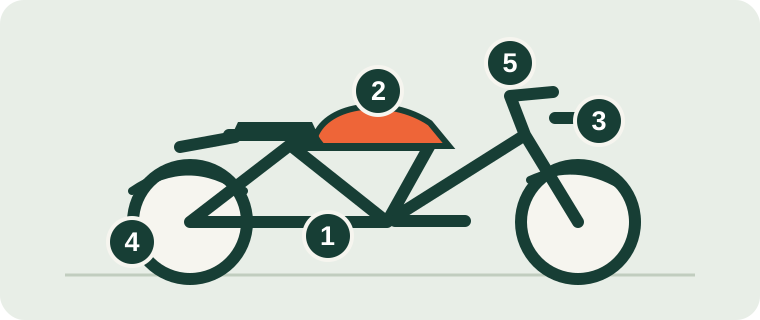
- Both sides and the whole bike
- Tank, panels and existing marks
- Mirrors, levers and lights
- Wheels, tyres and fitted items
- Odometer and the key record
Use the following sequence to check your preparation and the packing agreed for your booking. The specific work and materials depend on the motorcycle and transport arrangement.
- Record the unpacked condition. Clean off dust so marks are visible and let wet surfaces dry before taking photographs. Save views of both sides, front and rear, the tank or scooter panels, wheels, controls, existing marks and odometer. Keep the original files.
- Empty the storage spaces. Check the under-seat boot, pockets, tank bag and any fitted luggage. Separate the belongings you are carrying yourself from items expressly accepted for transport.
- Show the exposed and fitted parts. Point out mirrors, indicators, levers, a visor, top box, windscreen or other addition. Settle what stays fitted, what is removed and who will do any removal.
- Check the agreed protection before it is hidden. Ask which areas are padded and how wrapping is held in place. Raise a mismatch with the quoted scope before the bike leaves. Do not dismantle unfamiliar parts or alter an EV battery using a general checklist.
- Identify removed parts and the key. Any accepted separate item should be recognisable and listed. Keep the spare key with you rather than leaving it loose with the bike.
- Retain the record for delivery. Keep the photos, condition notes, accepted item list and consignment reference together, and send them to the person receiving.
Understand the material, then check the actual packing
| Material or arrangement | What to check |
|---|---|
| Soft padding, foam or bubble wrap | Which painted and exposed parts receive padding, and what will be in contact with the surface |
| Protective sheets or cardboard | Which corners or projections they protect and how the layers are secured |
| Outer wrapping | How it holds the agreed protection together; its presence alone does not establish waterproof cover |
| Separate packing for removed items | How the part is labelled and matched to the pickup inventory |
| Special frame or crate, if proposed | Whether the bike actually needs it, its price and whether it forms part of the written scope |
This table explains questions to raise, rather than claiming every material is used on every booking. At delivery, compare the bike in good light and keep the packing if there is a concern requiring instructions or an insurance assessment.
Questions to settle about packing
Ask how painted panels, lights, mirrors, levers and other exposed parts will be protected. Common packing approaches may use padding, wrapping and protective sheets, but your quote should identify the actual scope. Do not treat the name of a material as a guarantee against scratches, dents or moisture.
Confirm whether mirrors or accessories need removal, who will do it and how they will be labelled and recorded. Avoid dismantling parts yourself unless you have the proper instructions and ability. Discuss the loading and securing arrangement for a heavy, modified or unusual bike before pickup.
Different vehicles need different checks
Scooters and storage compartments
Empty under-seat storage and pockets. Tell the team about loose panels or a seat-lock problem. Do not leave keys, papers or a charger inside without an agreed record.
Heavy bikes and fitted accessories
Share the exact model and photos of crash guards, panniers, windscreens and other additions. Weight alone does not describe the handling requirement; dimensions and fragile fittings also matter.
Electric vehicles
Give the model and battery condition before booking so acceptance and preparation can be confirmed. Do not remove, disconnect or alter a battery based on a generic online checklist. Follow the appropriate vehicle and transport instructions.
Non-running bikes
Explain whether it can roll, steer and brake, and where it is parked. The collection arrangement must account for its condition rather than assuming it can be pushed out of any basement.
At the collection handover
Check that the condition notes, keys and any agreed accessories are recorded. Keep the pickup receipt and your photos. Raise a question before the bike leaves if the proposed packing or pickup differs from the written scope.
See documents and booking records and the full transport process.
Rain and delivery inspection
Discuss an accessible receiving point where the bike can be inspected safely. If the approach is waterlogged or restricted, contact the team before delivery. No covering should be assumed to make the shipment immune to every weather risk.
Compare the bike with your earlier photos before completing the delivery record. Count keys and listed accessories. Photograph any concern and record it on the receipt. If the vehicle appears damaged or does not operate normally, seek instructions before riding it.
Packing charges and insurance
Confirm whether packing is included or separately charged in your quote. We do not publish one packing amount for every model. Use the quote guide to compare the full scope.
ICICI Lombard transit insurance can be arranged at the stated 3% of declared bike value, separately from transport and subject to the policy issued. Packing and insurance are different parts of the booking; neither is a blanket damage-free guarantee.
Save this short checklist
Photos saved; belongings removed; accessories discussed; condition disclosed; model-specific instructions confirmed; document copies ready; access agreed; receiver informed; pickup record retained; bike checked at delivery.
Discuss your bike’s move